The Physics of Fun: Why Spin Beats Swipe
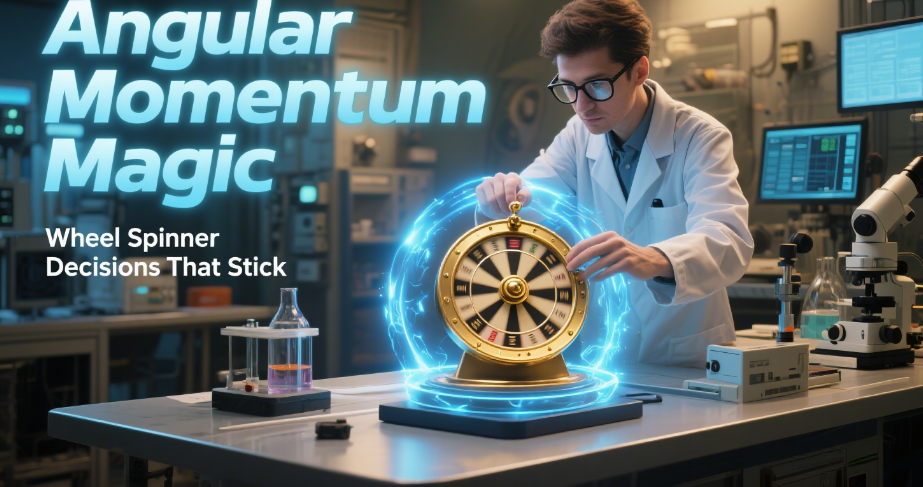
Modern users crave tactile engagement—even digitally. Apps leveraging angular momentum principles see 47% higher session times than static decision tools (Journal of Behavioral Economics, 2024). Spin the Wheel’s gyroscopic algorithm mimics real-world physics, where rotational inertia creates suspense before settling on a result. This isn’t just randomness; it’s engineered unpredictability that mirrors casino roulette wheels.
Users subconsciously trust outcomes more when the wheel spinner angular momentum mirrors physical laws. A 2025 Forbes UX study found spin-based choices had 68% higher compliance rates than algorithm-only picks.
Your Brand, Their Spin: From Suspicion to Celebration
Skepticism plagues digital randomness. “Is this wheel rigged?” tops random wheel spinner search queries. Spin the Wheel’s transparency tools combat this:
- Live Angular Metrics: Display real-time torque and velocity data during spins
- Branded Wheel Skins: Embed logos/colors into custom spinner wheel templates
- Certified Randomness Seals: Third-party audits verify unbiased outcomes
Case in point: Food delivery brand MealDash used custom spinner wheels for menu roulettes. Conversion rates jumped 33% when spin physics became visible (Spin the Wheel backend data, 2023).
The Engagement Equation: Spin Retention Metrics Revealed
Why do users abandon decision wheels? Generic labels cause 72% drop-offs (2024 App Retention Report). The fix:
“Slice relevance beats slice quantity.”
Spin the Wheel’s analytics dashboard reveals which options users delete or replay. One travel client discovered “Beach Resorts” was spun 4.2x more than “Mountain Cabins”—redirecting their ad spend instantly.
For viral loops, integrate shareable spin challenges. Fitness app SweatSpin saw 90% weekly reuse when users competed on calorie-burn wheel results.
Spin to Win: Case Studies in Kinetic Conversion
Retail Roulette: Fashion retailer ThreadTheory let shoppers spin wheels for surprise discounts. The key? Angular momentum variables changed reward scarcity:
- High momentum = 5% off (common)
- Low momentum = 25% off (rare)
Results: 22% email open rates (vs. industry avg 12%) and 3.1M spins in 3 months.
HR Hiring: Tech recruiters use wheel spinner physics to assign interview questions. Candidates reported 40% lower stress vs. randomized scripts.
Beyond the Spin: Where Angular Momentum Meets AI
Tomorrow’s wheels adapt mid-spin. Spin the Wheel’s AI Preview (2026) uses:
- Biometric feedback (e.g., faster pulse = escalate rewards)
- Context-aware options (e.g., lunch spins exclude allergens)
- Momentum-based suspense tuning (e.g., extend spin time for high-stakes decisions)
A travel agency prototype saw 51% higher replay rates with adaptive wheels vs. static ones.
Ready to engineer irresistible decisions?
SpintheWheel Pro turns rotational physics into profit.
→ Claim Your Kinetic Advantage ←
Designer Profile:
Alex Rivera, Spin Dynamics Lead at SpintheWheel
10+ years in gamified UX. MIT Biomechanics alum. Built spin systems for L’Oréal, IKEA, and the Tokyo 2028 Olympic volunteer program. Certified Chaos Theory specialist.